Scientists Reveal a Tiny Brain Chip That Streams Thoughts in Real Time
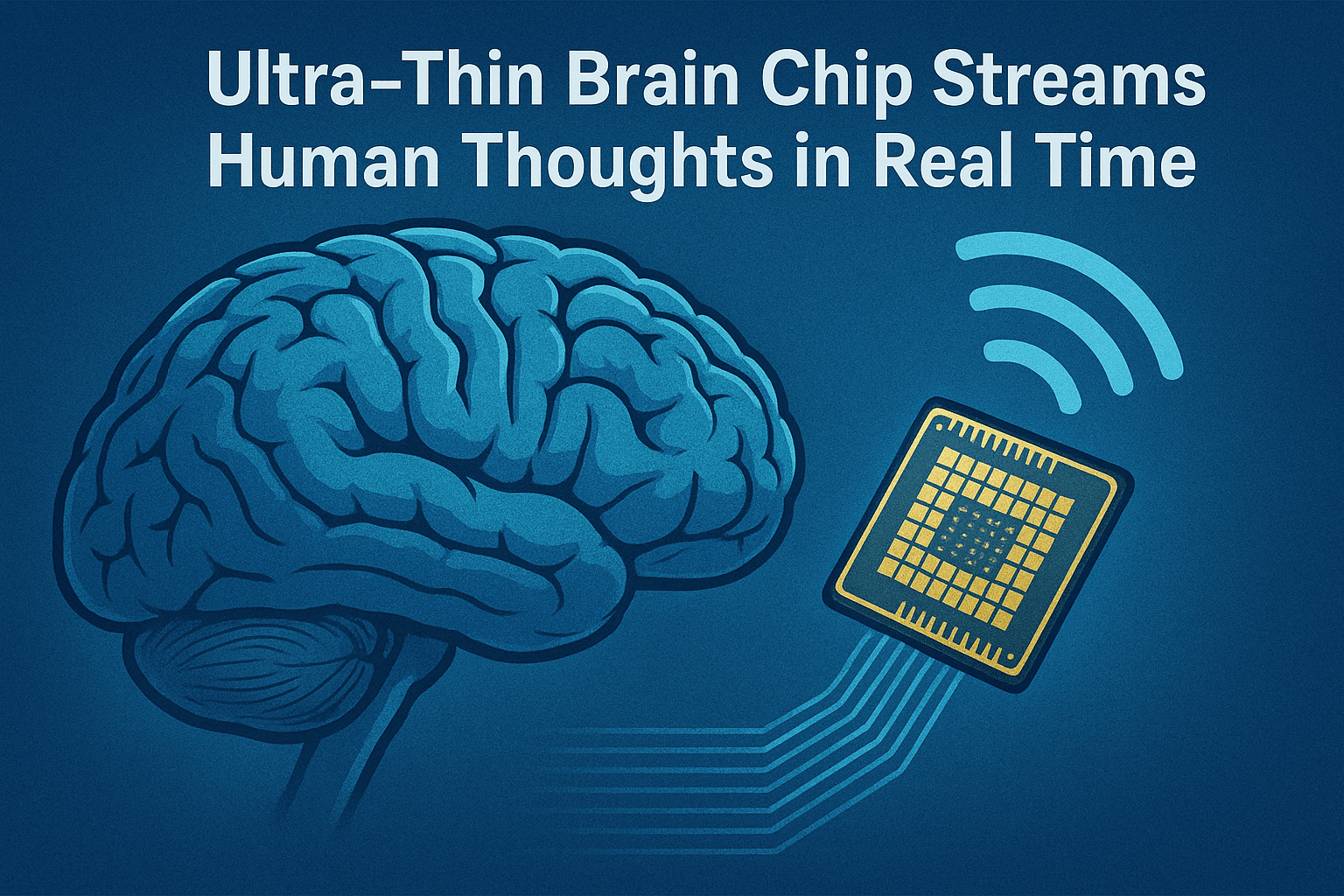
Scientists Reveal a Tiny Brain Chip That Streams Thoughts in Real Time
Researchers develop a wafer-thin, high-bandwidth brain implant capable of streaming detailed neural activity wirelessly, opening new possibilities in neurotechnology.
Researchers from Columbia University, in collaboration with NewYork-Presbyterian Hospital, Stanford University, and the University of Pennsylvania, have developed an ultra-thin brain implant capable of streaming detailed neural activity to external computers in real time. This advance in brain-computer interface (BCI) technology could transform both clinical neurotechnology and human-machine communication.
What Is the New Brain Chip?
The new neural device, called the Biological Interface System to Cortex (BISC), is a single silicon chip engineered to provide a high-bandwidth wireless connection between the cerebral cortex and external computers. Key specifications include:
- Chip thickness: approximately 50 micrometers (similar to a human hair)
- Volume: less than 1/1,000th that of conventional implants
- 65,536 electrodes, 1,024 recording channels, and 16,384 stimulation channels
- Wireless throughput: up to 100 Mbps
This allows simultaneous high-resolution recording and stimulation across large cortical areas using micro-electrocorticography (μECoG) via a minimally invasive approach.
Why This Matters
The technology overcomes major limitations of traditional BCIs:
- Size and invasiveness: Avoids bulky electronics and complex surgery
- Data transmission: High-bandwidth wireless data allows advanced AI-based decoding of neural signals
Clinical and Research Implications
Potential applications include:
- Epilepsy management: Detect and prevent seizures in real time
- Motor and sensory restoration: Support neuroprosthetics for paralysis or limb loss
- Visual and speech restoration: Reconstruct or stimulate sensory experiences
- Neuropsychiatric treatments: Aid therapy for ALS, stroke, and other CNS conditions
Technological and Commercial Development
The chip is fabricated using advanced BCD technology, integrating mixed-signal functionality, power management, and wireless transceivers on a microscopic footprint. A startup, Kampto Neurotech, is moving the innovation toward clinical applications.
Future Prospects
This development lays the groundwork for seamless integration between human brains and AI, enabling advanced assistive systems and potential cognitive enhancement technologies.
Related Articles

The Dream Factory: How London's First Playhouse Shaped Shakespeare
November 23, 2025
The Power of Self-Knowledge: A Guide to Understanding Yourself
November 23, 2025
Timeless Wealth Wisdom from The Richest Man in Babylon
November 23, 2025
November 2025 Must-Reads: Dolly Parton, Patti Smith, Mythic Fantasy & More
November 24, 2025
IQ, EQ, SQ, AQ: The Four Types of Intelligence and Why You Need More Than One
December 2, 2025
Developing HealthyMinds: Building a Comprehensive Web Application
December 2, 2025
Beyond Manipulation: 3 Principles for Cultivating Authentic Influence
December 4, 2025
Before You Quit Your Job—Why Entrepreneurship Might Be Your Next Step
December 4, 2025
HELB Loan Defaults Soar: Lawyers, Doctors & Engineers Lead the List
December 5, 2025
Understanding Jamhuri Day — Kenya’s Journey to Freedom
December 12, 2025
John Wycliffe: The Morning Star of the Reformation
December 15, 2025
Climate Fiction as Future-Making: Why Cli-Fi is More Than Just Representation
December 17, 2025
Miguna Miguna Declares 2027 Presidential Bid with Transformative Vision
January 16, 2026
Top-Selling eBooks: Understanding the Genres Dominating Digital Reading
March 5, 2026
Ghana and Senegal Crowned Champions at the 2026 CAF African Schools Football Championship Continental Finals
April 11, 2026Fuel Your Mind with the Power of Reading
Discover inspiring eBooks from Healthy Minds that spark creativity, boost knowledge, and encourage personal growth. Explore captivating stories, learn valuable skills, and open your mind to endless possibilities with every book you read.
Oh, and the best bit...It's free!